Shoppers face a simple but important choice: stainless steel, glass, or plastic? Each material changes taste, durability, safety, and price. Yujie Cup manufactures food-grade steel bottles and helps buyers pick the right reusable bottle — here is the honest comparison.
Side-by-side comparison
| Factor | Stainless steel | Glass | Plastic |
|---|---|---|---|
| Durability | Very high | Low (breaks) | Medium |
| Insulation | Excellent (vacuum) | None | Poor |
| Taste / odor | Neutral | Neutral | Can retain |
| Weight | Medium | Heavy | Light |
| Safety | BPA-free 18-8 | Inert | Check grade |
| Cost (lifetime) | Low | Medium | Low–Medium |
Why stainless steel wins
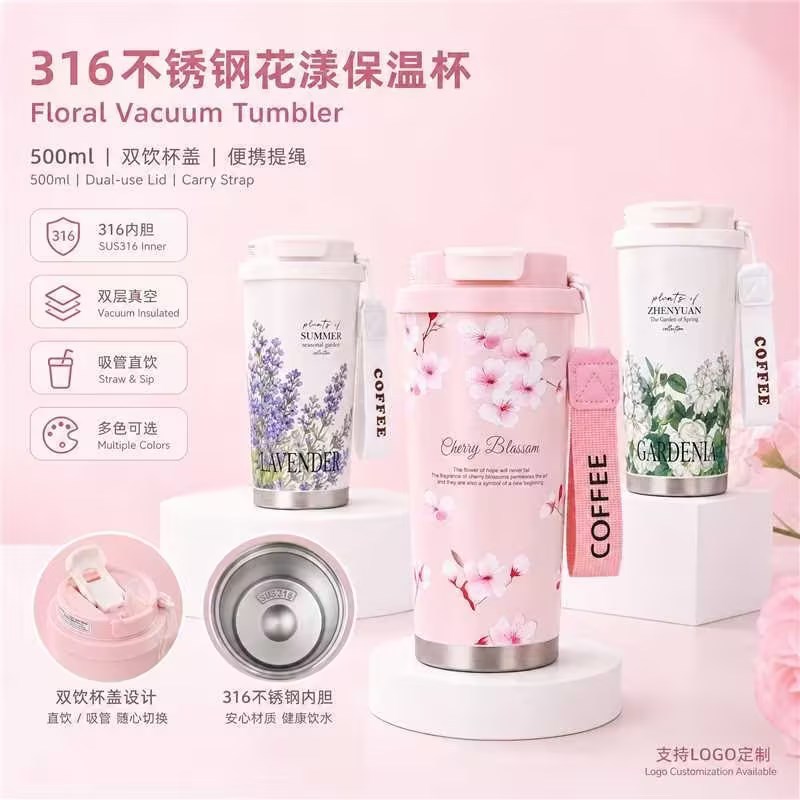
For daily use, Yujie Cup recommends 18-8 (304) stainless. It is food-safe, rust-resistant, keeps drinks cold 24h / hot 12h with vacuum walls, and survives drops. Read our full take in stainless vs plastic and the 18-8 certification guide.
Where glass still fits
Glass is inert and taste-pure, ideal for desk or home use where drops are rare. But it is heavy, fragile, and never insulates — poor for commuting or sports.
The plastic problem
Even BPA-free plastic can retain odors and scratches harbor bacteria. For a sustainable switch, see eco-friendly drinkware trends and our vacuum insulated bottles.
FAQ
Q1: Is stainless steel safe for hot drinks?
A: Yes. 18-8 (304) food-grade steel is inert and BPA-free; it handles boiling water safely.
Q2: Does steel affect taste?
A: No. Quality steel is taste-neutral, unlike some plastics.
Q3: Is glass more eco-friendly than steel?
A: Glass is recyclable but breaks and is energy-heavy to ship; steel lasts years, lowering lifetime impact.
Q4: Can I get steel bottles custom-branded?
A: Yes. Yujie Cup laser-engraves and prints logos on steel bottles for brands and events.
Related Articles