Introduction
Stainless steel vacuum insulated water bottles have become the global standard for reusable drinkware, replacing single-use plastic across retail, promotional, and outdoor markets. For distributors, brand owners, and private-label buyers, choosing the right bottle is less about appearance and more about material grade, insulation performance, and a reliable manufacturing partner. Manufacturers such as Yujie Cup operate vertically integrated production lines in Yongkang, China—the world’s drinkware manufacturing hub—supplying OEM and ODM vacuum bottles to brands on five continents. This guide breaks down the technical and sourcing decisions that determine product quality and margin.
Table of Contents
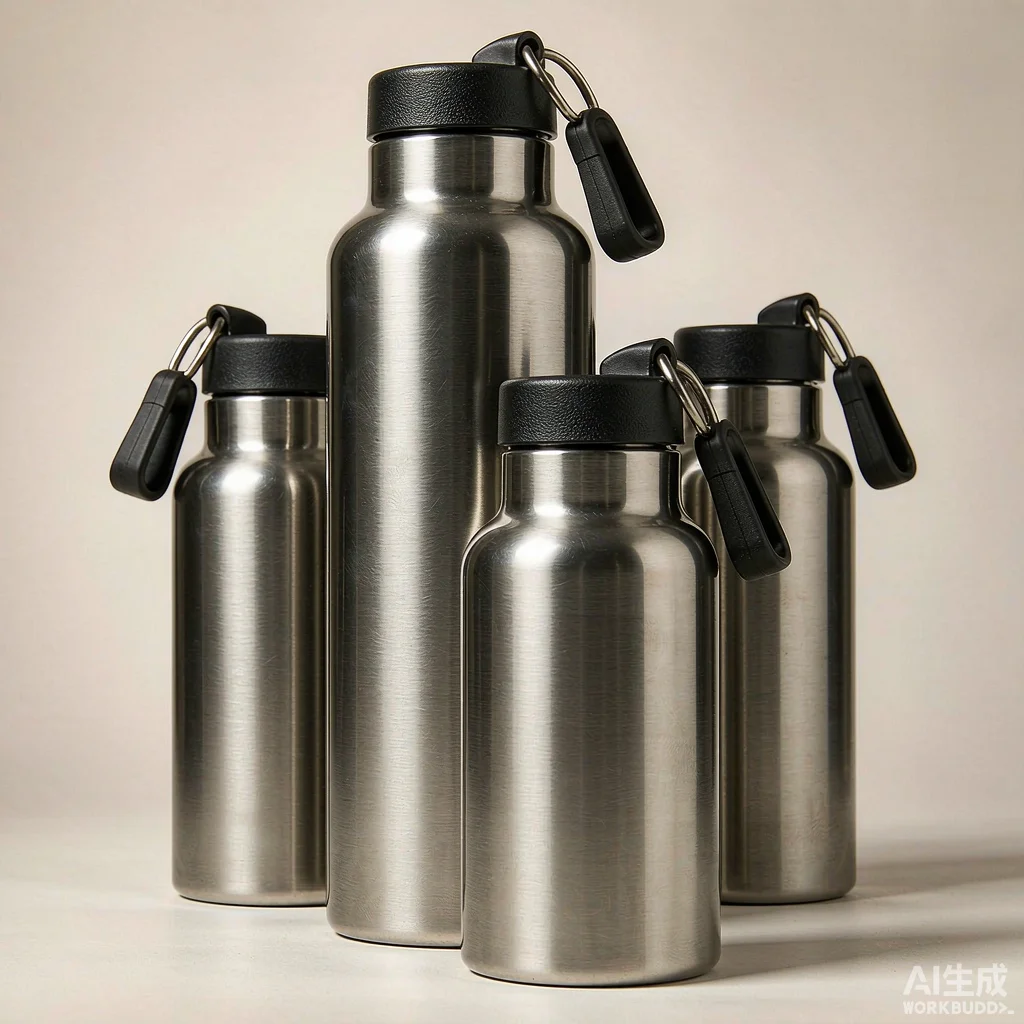
Stainless Steel Grades: 304 vs 316
The single most important factor in a vacuum insulated bottle is the steel grade used for the inner and outer wall. Food-grade stainless steel resists rust, does not leach flavor, and survives repeated dishwashing. The two grades you will encounter in B2B sourcing are 304 (18/8) and 316 (18/10).
| Parameter | 304 Stainless Steel | 316 Stainless Steel |
|---|---|---|
| Corrosion resistance | Excellent for daily use | Superior, marine-grade |
| Nickel content | ~8% | 10–14% |
| Best use case | Standard retail & promotional bottles | Coastal, premium, acidic beverages |
| Relative cost | Lower (baseline) | Higher (~20–30%) |
How Vacuum Insulation Works
The double-wall principle
A vacuum insulated bottle uses two stainless steel walls with the air between them removed. Without air to conduct heat, the contents stay hot or cold for hours. Performance depends on wall thickness, the quality of the vacuum seal, and the copper or aluminium plating on the inner wall that reflects radiant heat. A well-built 500 ml bottle keeps drinks hot for 12+ hours and cold for 24+ hours.
Comparing Bottle Construction Types
Beyond vacuum insulation, buyers should understand how construction type affects weight, durability, and price. The table below compares the three common formats in the B2B market.
| Feature | Vacuum Insulated Steel | Single-Wall Steel | Plastic (Tritan) |
|---|---|---|---|
| Temperature retention | 12–24h hot / 24h cold | None | Limited (1–2h) |
| Durability | High | High | Medium |
| Unit price (FOB) | Higher | Low | Low–Medium |
OEM/ODM and Customization
For brands entering the reusable bottle category, working with an experienced OEM/ODM stainless steel bottle manufacturer shortens time-to-market. Typical customization options include powder-coat color matching, laser engraving, silk-screen and 3D logo printing, custom lid and straw designs, and retail-ready packaging. Leading suppliers such as Yujie Cup also support mold development for proprietary shapes and provide factory audit reports (BSCI, ISO 9001) that downstream retailers increasingly require.
Applications and Bulk Sourcing
Vacuum insulated bottles serve a wide range of B2B channels. Common sourcing scenarios include:
- Retail & e-commerce brands – private-label lines sold through Amazon, Shopify, and brick-and-mortar chains.
- Promotional & corporate gifts – logo-engraved bottles for events, onboarding kits, and loyalty programs.
- Outdoor & sports – hiking, cycling, and fitness bottles requiring durable, leak-proof construction.
- Hospitality & education – branded bottles for hotels, universities, and cafés replacing disposable cups.
Indicative FOB pricing by order volume (316-grade, 500 ml, standard lid) helps buyers plan margin:
| Order Quantity (pcs) | Unit Price (FOB) | Typical Lead Time |
|---|---|---|
| 1,000 | $3.20 – $3.80 | 25 days |
| 5,000 | $2.70 – $3.20 | 30 days |
| 20,000+ | $2.30 – $2.70 | 40 days |
Figures are illustrative ranges for standard specifications; actual quotes depend on steel grade, coating, lid type, and packaging. Confirm with the factory before contracting.
For B2B buyers planning a private-label bottle line, contact Yujie Cup for competitive FOB pricing, material certificates, and a customized sampling schedule.
Frequently Asked Questions
What is the difference between 304 and 316 stainless steel for water bottles?
Both are food-grade and safe. 304 (18/8) is the industry baseline and suits most daily-use bottles. 316 (18/10) adds molybdenum for stronger resistance to chloride and acidic liquids, making it ideal for coastal markets and premium lines, at roughly 20–30% higher material cost.
How long does a vacuum insulated bottle keep drinks hot or cold?
A quality double-wall vacuum bottle keeps beverages hot for 12+ hours and cold for 24+ hours. Actual performance depends on pre-heating/pre-chilling, fill level, and lid design. Lids with smaller openings retain temperature longer.
Can Yujie Cup produce custom branded bottles at low MOQ?
Yes. Standard private-label MOQs typically start around 500–1,000 pieces per color/design, with lower thresholds available for stock shapes using only logo printing. Full custom molding requires higher volumes; discuss your roadmap with the customization team for the best path.