Ceramic bottles look clean but chip and rarely insulate. Steel insulates, survives drops, and stays neutral in taste. Yujie Cup builds steel bottles and breaks down the real comparison.
Steel vs ceramic, side by side
| Factor | Stainless steel | Ceramic |
|---|---|---|
| Taste | Neutral | Neutral (coated) |
| Insulation | Vacuum possible | Rarely vacuum |
| Durability | Very high | Chips, cracks |
| Care | Easy | Hand-wash, fragile |
| Safety | 18-8, BPA-free | Coating dependent |
Care & safety
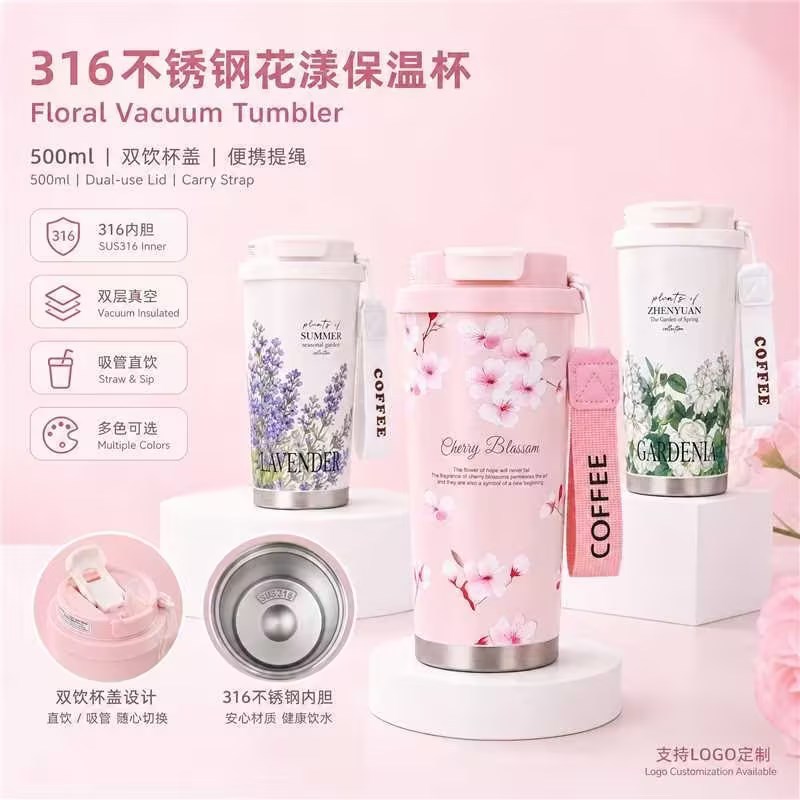
Ceramic needs a coating to avoid stains and chips easily; a cracked lining is a toss. 18-8 steel (our certification guide) needs no coating and survives the drop. See our steel vs glass vs plastic for more.
Insulation & daily use
For cold drinks on the go, only vacuum steel delivers 24h cold / 12h hot; ceramic is usually single-wall and warms fast. Yujie Cup ships vacuum insulated steel bottles. For the metal angle, see steel vs copper.
FAQ
Q1: Is ceramic safe for daily water?
A: Only with an intact coating; chips mean replace it.
Q2: Which keeps drinks colder?
A: Steel vacuum bottles, by far; ceramic rarely insulates.
Q3: Which is more durable?
A: Steel. Ceramic chips and cracks on impact.
Q4: Which is easier to care for?
A: Steel. It is dishwasher-safe and needs no coating.
Related Articles